Geocell

GEOCELL RANGE
Geocell products
and applications.
SELECTED SOLUTION
Cellular Confinement
Restricts lateral infill movement, improves density and increases shear resistance through cell-to-soil interaction.WHAT IS A GEOCELL?
Three-dimensional ground support, engineered around the site.
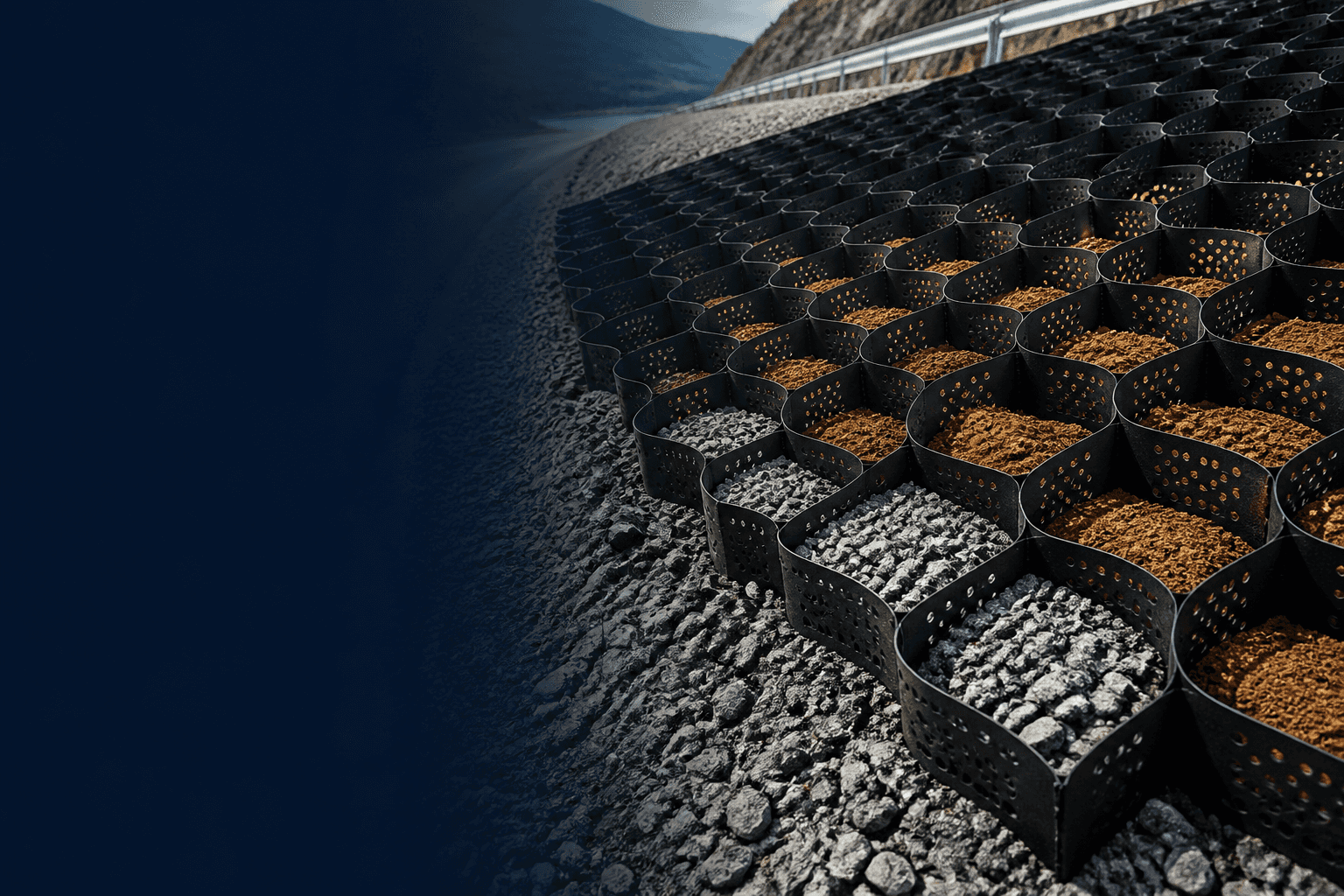
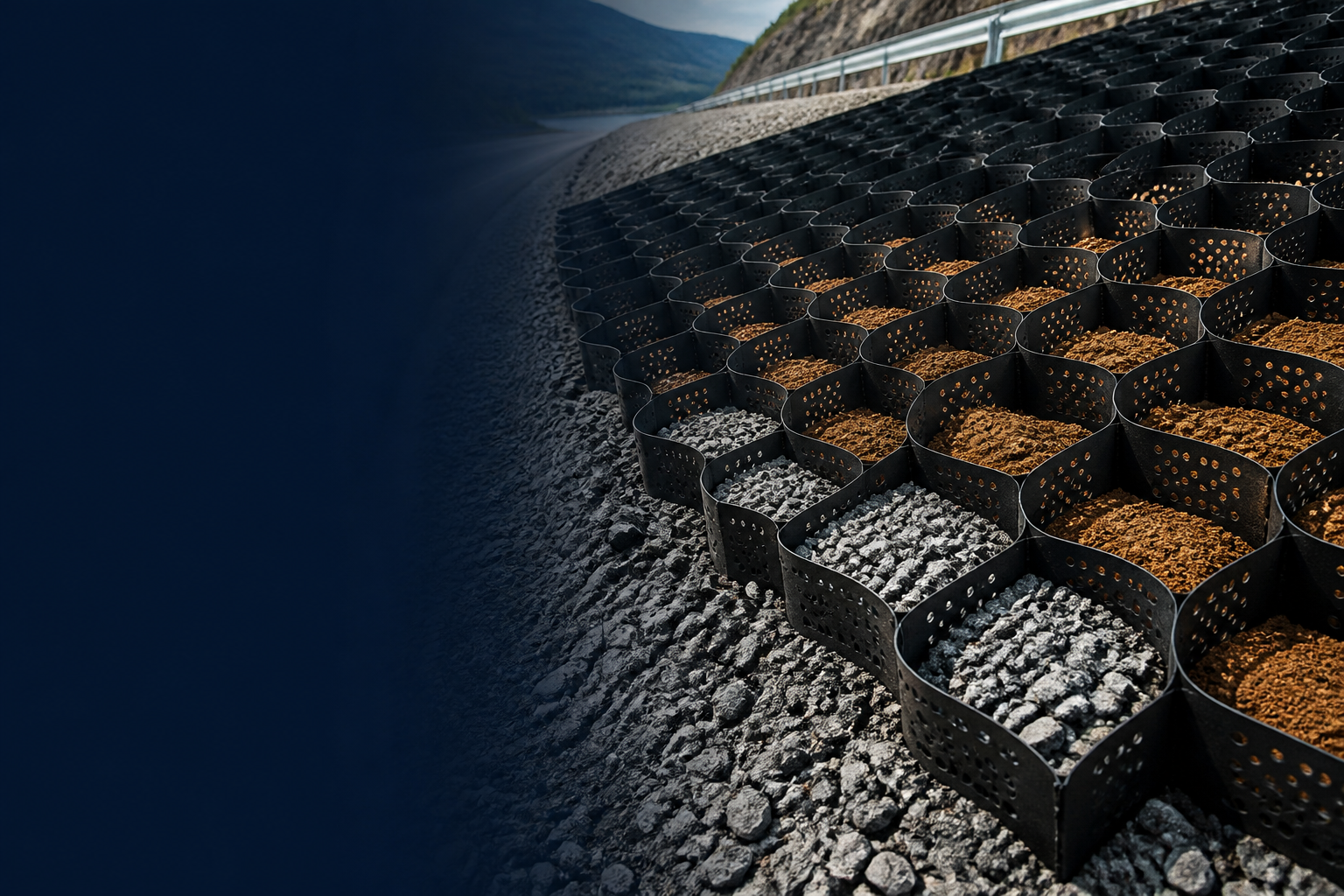
A geocell is an expandable cellular confinement system used for soil and ground stabilisation, erosion control and load support. Once opened and filled with soil, aggregate or concrete, its connected honeycomb structure forms a stable layer that restrains infill and distributes loads.
Geocells can support road construction, weak-subgrade stabilisation, working platforms, slope protection and channel protection. Perforations support controlled water movement and interaction with the infill, while cell walls limit lateral displacement.
Geocells serve three core purposes.
The cellular network confines granular infill and restricts lateral movement. This creates a stable composite layer that distributes loads more evenly and reduces rutting, settlement and local deformation.
PERFORMANCE ENGINEERING
What affects geocell performance?
A geocell is only as reliable as the complete system around it. These eight factors guide product selection, engineering and installation.Material properties
HDPE molecular structure and controlled extrusion provide flexural modulus, dynamic stiffness, creep resistance and tensile strength. UV, heat and oxidation resistance help preserve performance during long-term exposure.
Geocell geometry and size
Cell height, width, wall thickness and perforation design work together. Correct proportions improve load distribution, deformation resistance, hydraulic behaviour and stability rather than simply minimising material usage.
Infill material properties
The modulus, cohesion and friction angle of sand, aggregate or locally available soil directly influence system behaviour. Infill is selected around bearing capacity, settlement, drainage and vegetation requirements.
Installation factors
Site preparation, panel orientation, full cellular expansion, placement depth, infill compaction, anchoring and connection methods determine whether the installed system performs as designed.
Loading conditions
Slope stabilisation, retaining structures, pavements and working platforms impose different vertical, horizontal and combined forces. Cell configuration and material selection must respond to the actual design loads.
Interface properties
Friction and adhesion between the cell wall and infill control shear behaviour. Clayey soil, sand and aggregate interact differently, so compaction and interface performance must be assessed together.
Environmental factors
Site drainage, surrounding pore pressure, water movement, temperature and exposure affect confined soil stability. Perforation geometry and drainage design are especially important on slopes and vertical applications.
Manufacturing quality
Polymer consistency, extrusion control, perforation accuracy and weld strength determine finished-cell reliability. Park applies controlled manufacturing and validation to deliver dependable tensile, seam and deformation performance.
GEOCELL FAQ
Questions engineers and buyers ask.
What is an HDPE geocell?+
An HDPE geocell is an expandable three-dimensional cellular confinement system. When its connected cells are filled with soil, aggregate or concrete, the system restrains lateral movement and forms a more stable load-distribution layer.
How do geocells stabilise weak soil?+
Geocell walls confine the selected infill and limit its lateral displacement under loading. The confined layer spreads applied pressure across a wider area, helping control rutting, settlement and local deformation over weak subgrades.
Where are geocells commonly used?+
Common geocell applications include road and pavement-base stabilisation, haul roads, working platforms, slope protection, erosion control, embankments, channels and selected retaining structures.
How do geocells support slope erosion control?+
Expanded cells hold soil or aggregate on the slope surface, reducing downslope movement and washout. Perforated systems can also support drainage and vegetation when these functions form part of the engineered design.
What determines geocell performance?+
Performance depends on cell height and geometry, polymer and seam properties, infill selection, subgrade condition, loading, drainage, anchoring, connection details and installation quality.
GEOCELL APPLICATION GUIDE
Learn how cellular confinement protects slopes.
Read the slope protection guidePRODUCT SPECIFICATIONS
Technical range
RELATED GEOSYNTHETIC PRODUCTS
Complete the system.
Compatible materials for reinforcement, separation, drainage and long-term ground performance.
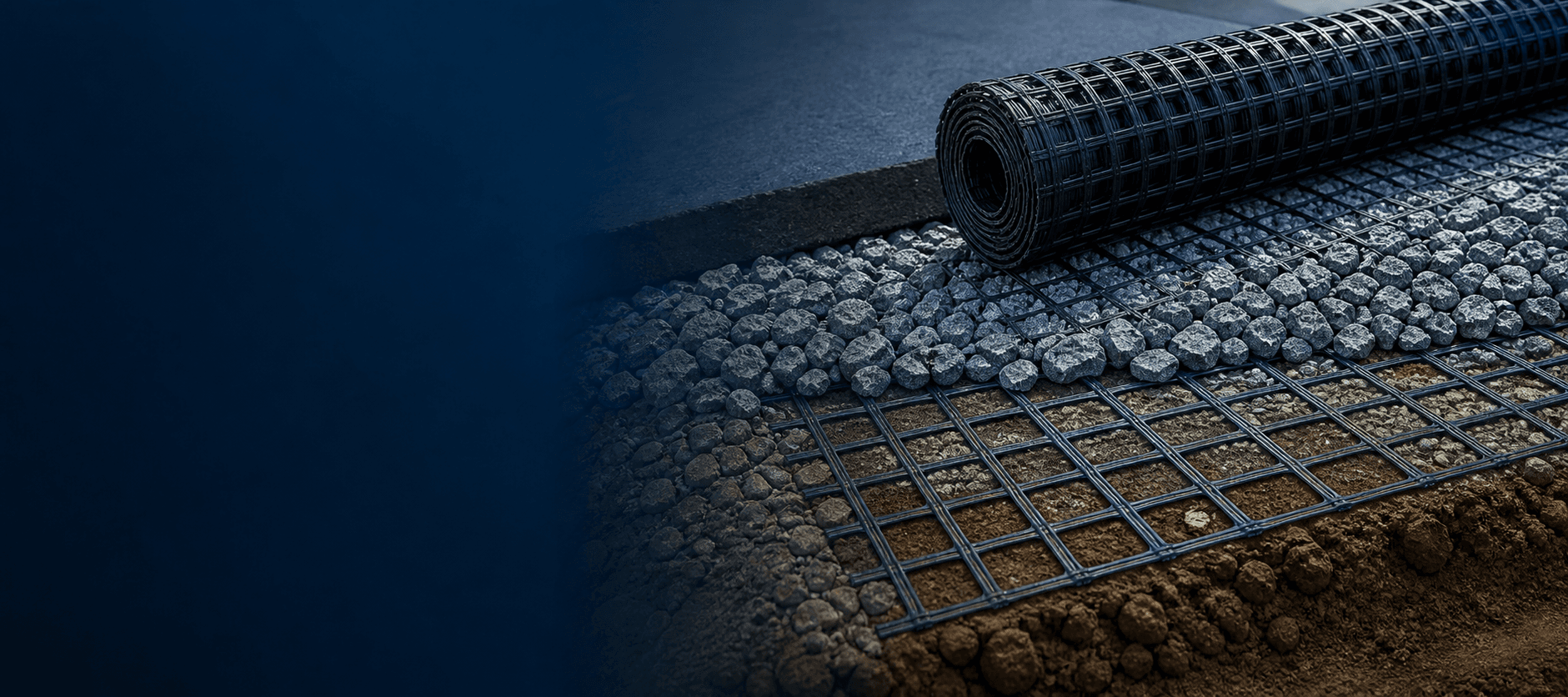 01Geogrids
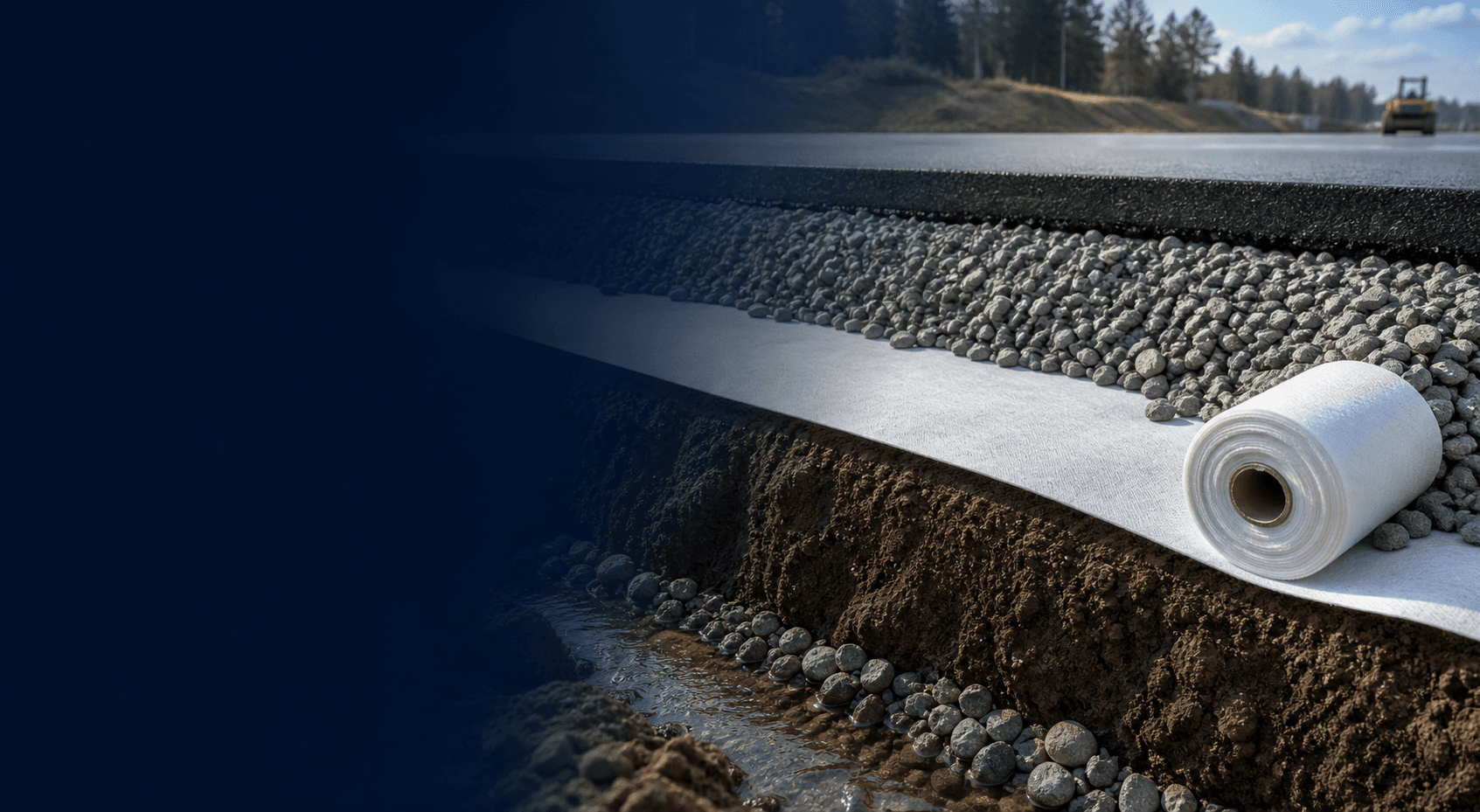 02Geotextile Fabric
 03Geo Membrane
LOOKING FOR GEOCELL?