What is a geogrid?
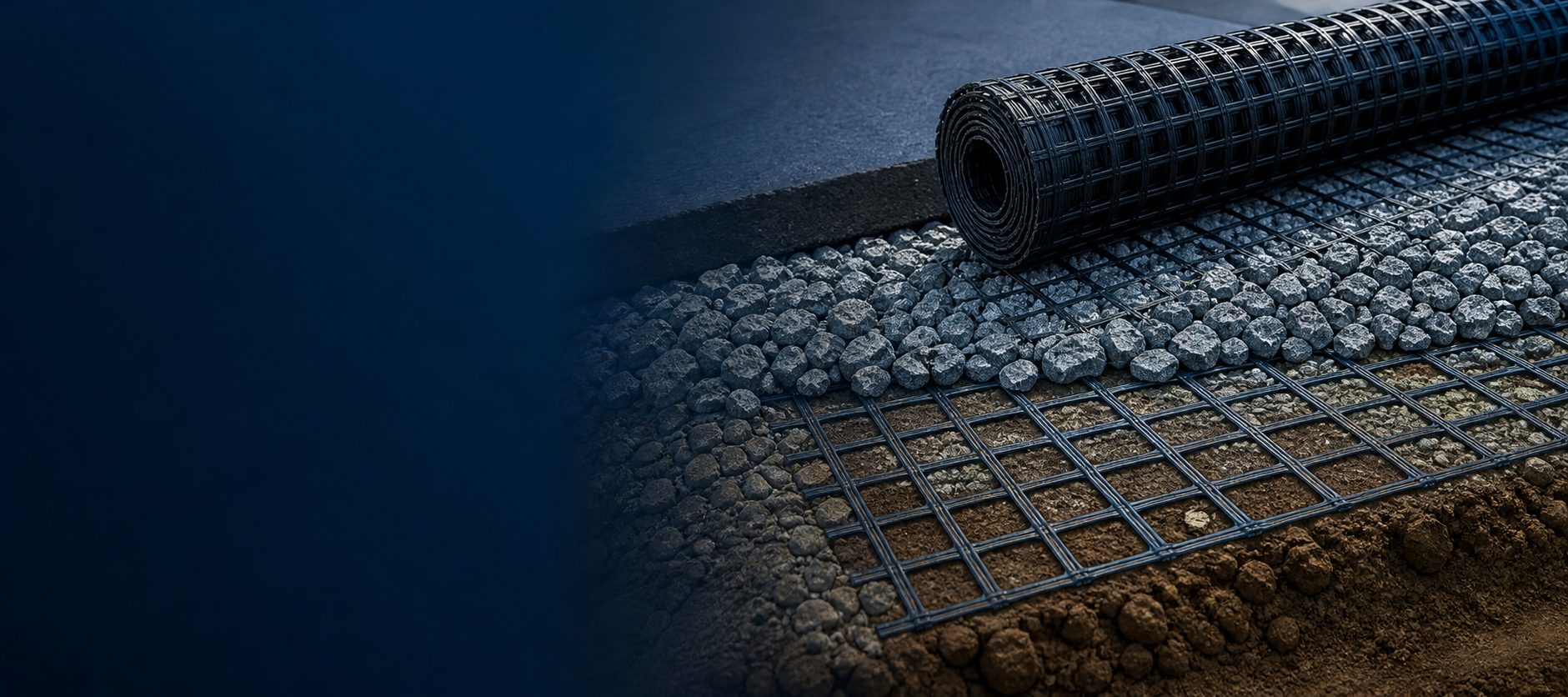
A geogrid is an open polymer grid used to reinforce soil and granular material. Its ribs and apertures interact with compacted aggregate or engineered fill, enabling the material layers to work together as a reinforced ground system.
Geogrids are selected according to the required function, loading, fill properties, ground conditions and construction arrangement. A project-specific assessment remains essential because no single grid suits every application.
How does a geogrid work?
Aggregate enters the geogrid apertures and interacts with the ribs. This mechanical interlock restrains lateral particle movement and creates a more stable composite layer.
The reinforced layer can distribute applied loads across a wider area and help control deformation. Actual performance depends on grid geometry, stiffness, junction behaviour, aggregate compatibility, placement and compaction.
What is geogrid used for?
- Road subgrade and pavement-base stabilisation
- Working platforms for cranes and construction equipment
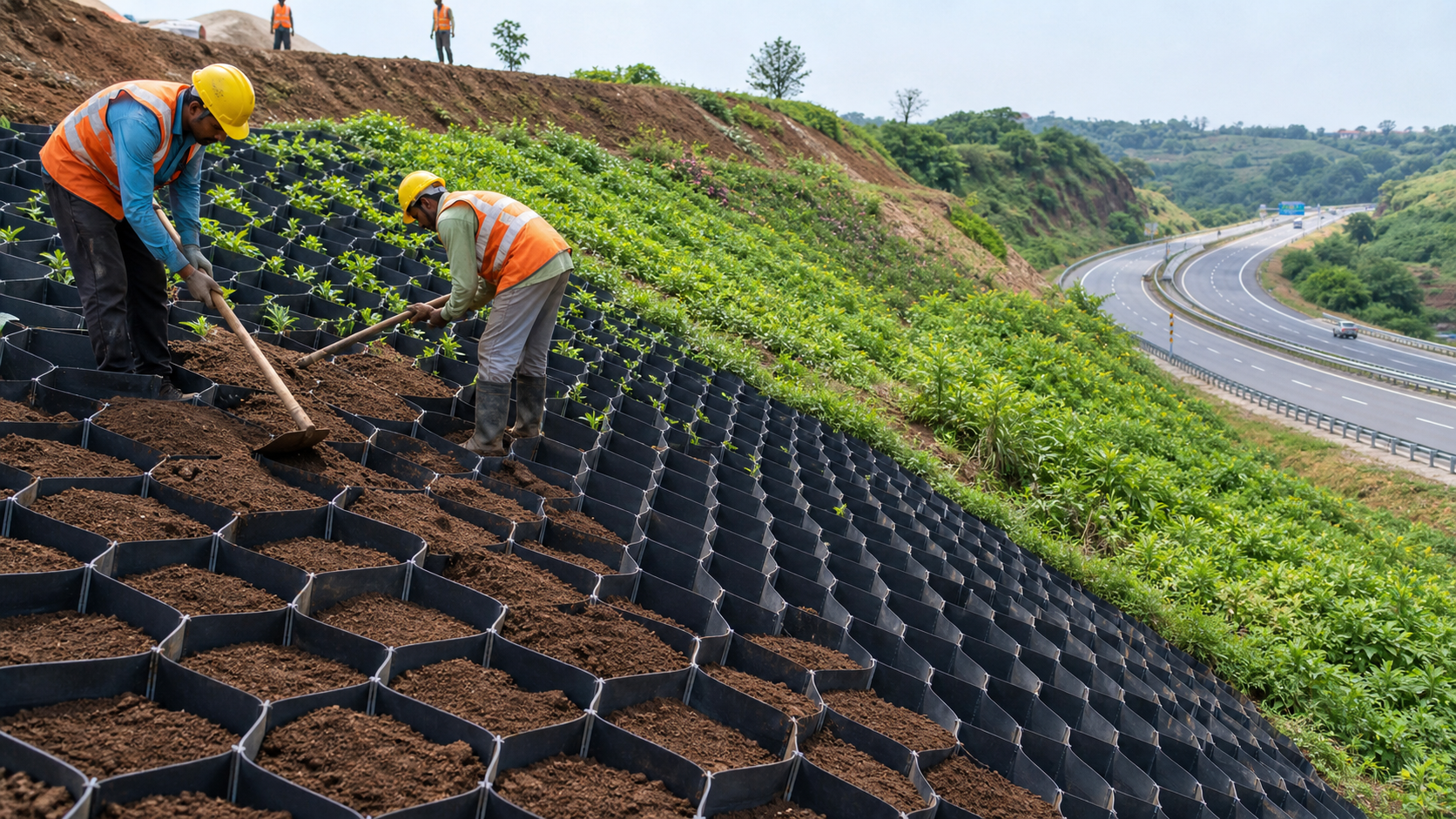
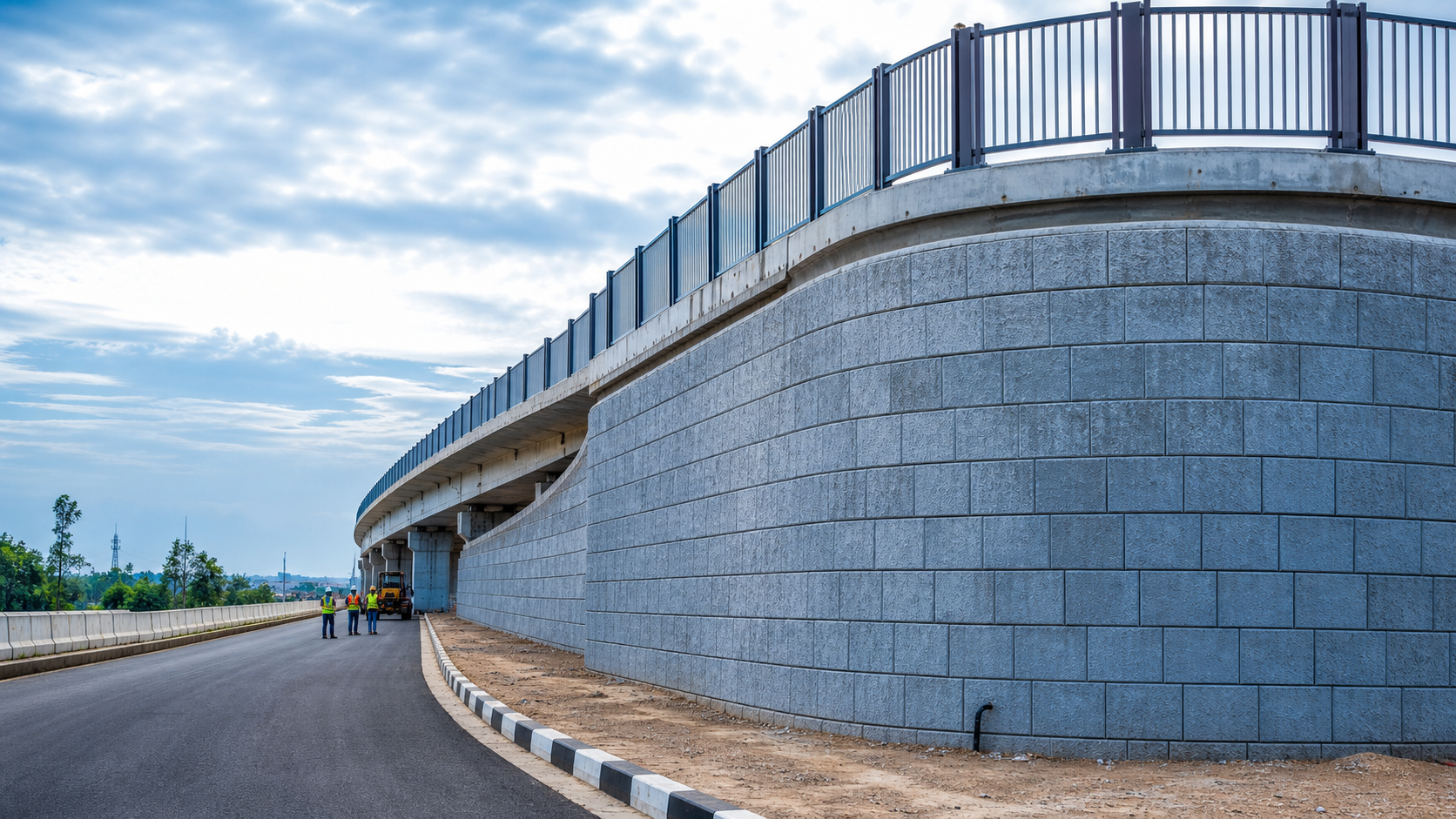
- Reinforced soil retaining walls and steep slopes
- Foundation and embankment support over weak ground
- Railway formation, ballast and sub-ballast reinforcement
Types of geogrids
Uniaxial geogrids are principally designed to carry tensile load in one direction and are commonly considered for reinforced soil walls and slopes. Biaxial geogrids provide reinforcement in two principal directions and are often used in road bases and working platforms. PVA and other specialist geogrids may be selected where project chemistry, stiffness or long-term behaviour requires a different material response.
Geogrid selection factors
- Design function and applied loading
- Subgrade strength and groundwater conditions
- Fill grading and aperture compatibility
- Installation damage and environmental exposure
- Required design life and applicable project standards
Geogrid installation basics
Prepare the formation, place the geogrid in the designed orientation, maintain the specified overlap or connection detail and place fill without displacing or damaging the material. Compaction and construction traffic should follow the approved method statement.
Contact Park for product information and application support for your road, railway, working-platform or reinforced-soil project.